
Reduce time-to-market while lowering scrap costs?
That’s what depanelization is for.
As PCB assemblies become smaller, more complex, and increasingly populated with sensitive components, manufacturers face a growing challenge: how to separate individual boards without damaging the product, slowing production, or increasing scrap rates.
Choosing the right depanelization technology is key to preventing these risks.
Depanelization is the process of separating individual PCBs from a larger manufacturing panel after assembly, which can be done manually as well as automatically. It has become a common part of high-volume production, especially for industries like automotive, medical, industrial electronics, and connectivity. Depanelization is particularly valuable for boards with edge-mounted components, irregular geometries, and small PCB formats where mechanical stress during separation can affect product quality.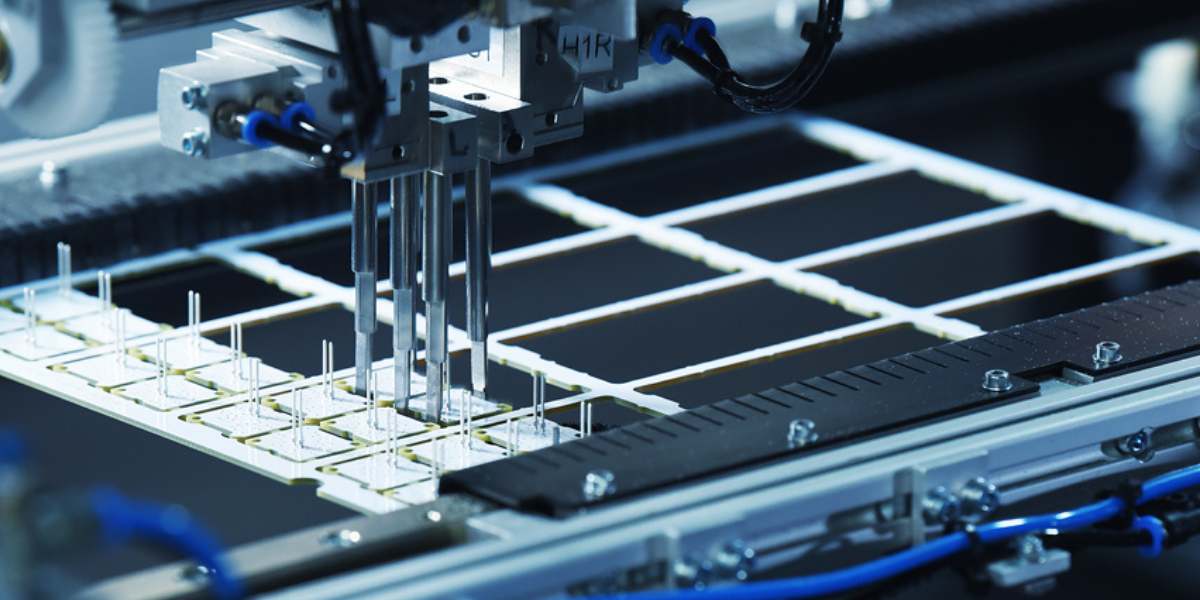
Parallel processes: Loading, uploading, automatic depaneling, inspection, laser marking, packaging
It brings customers the following advantages:
✓ Improved product reliability by reducing the risk of PCB damage during board separation and minimizing stress on solder joints, components, and PCB traces.
✓ Higher yield by increasing throughput due to automated depanelization and parallel processes.
✓ Reduced scrap and rework costs by preventing micro-cracks in components and solder connections; less damage during separation means fewer rejected boards.
✓ Flexibility with a broad choice of technologies and methods depending on the product and series size.
In the area of depanelization, we have mastered all of the current depanelization processes:
• Manual and semi-automated depanelization using a rotary cutter
• Semi-automated depanelization with an impact cutter
• Fully automated depanelization using cutting and stamping technology
• Fully automated depanelization using a milling process, including inline
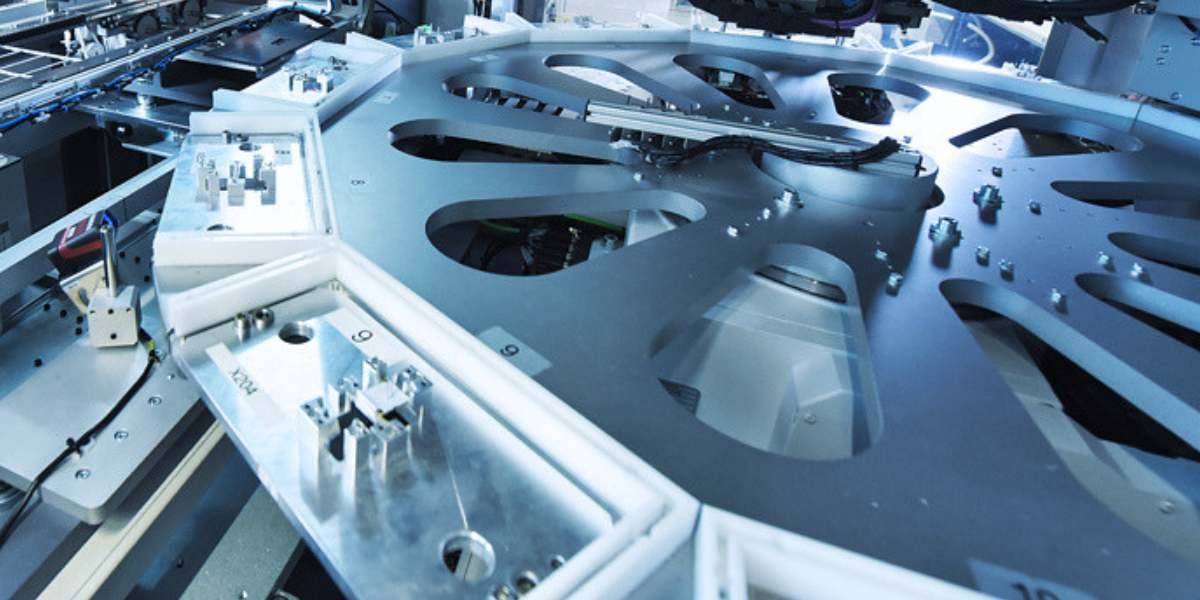
Depaneling Process: Automatic Separation of Printed Circuit Boards
For depanelization, we are equipped with 8 semi-automated Divisio 2100 milling machines. Loading, unloading, and packaging happen parallel to the milling process on special round tables for parallel working, heavily reducing the throughput time.
With a broad range of setups and equipment, we can depanelize standard PCB material FR4, as well as metal-core PCBs with copper or aluminum.
Our customers can also choose from two options for a complete inline milling concept:
✓ Only milling and packaging in trays
✓ Milling, testing, laser marking, and packaging in trays
Looking for ways to accelerate time-to-market for your high-volume production while maintaining consistent quality?
🖂 Contact us, we know how.